Branded Team Minifig Handouts for Event Buzz

Branded Team Minifig Handouts for Event Buzz

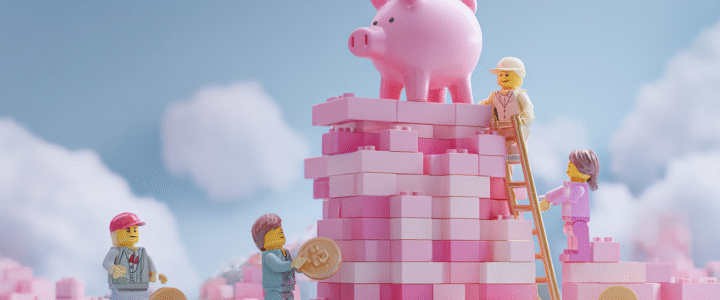
Pocket money talks often drift into eye rolling territory yet swap numbers for a colorful minifig and attention snaps back. This minifig budgeting lesson links coins to a goal a child can hold so each chore payment feels real. The focus keyphrase we chose will guide the structure that follows.

Table of contents

  1. Why choose minifigs for money skills
  2. Three jar setup that sticks
  3. Making a progress ladder chart
  4. Shopping day without stress
  5. Answers to common questions
  6. Where to pick up figures that inspire
  7. Wrap up

Why choose minifigs for money skills

Children love stories. A ready-made minifig slides into any tale with ease. When that tiny explorer also carries a price, the plot suddenly has a money twist. I believe the trick works because the toy is concrete. A five-coin chore now equals one visible stride toward placing that figure on the shelf. For another way play supports growth, see our post Mindful Play and notice how simple scenes spark big conversations.

The minifig budgeting lesson shines because it removes vague goals. A child sees the exact figure waiting in a bookmark tab and asks what chore lands the next coin. That question beats any lecture on delayed gratification.

Three jar setup that sticks

Label three clear jars Save Share Spend. Let kids add stickers and marker art. Matching the jar art to the figure theme boosts excitement. Place jars where pocket money usually lands like the kitchen counter. Each time coins arrive split them by percent. Popular starting splits are fifty Save forty Spend ten Share but feel free to tweak.

Update jar totals every weekend. Use a small whiteboard so numbers stay visible. Ask how many coins still needed for the minifig budgeting lesson goal. The math pops up naturally and repetition cements place value skills.

Need more guidance on turning everyday habits into long-term skills? Browse The Benefits of a Diverse Learning Environment for the principles that shape our program, then adapt those ideas to your own Save Share Spend jars.

Making a progress ladder chart

Draw a ladder with ten rungs on card stock. Tape a printout of a generic space at the top then tape a photo of the desired minifig over that space. Each rung equals a fixed amount based on figure price. When the Save jar hits that mark color a rung together.

Hang the chart next to the jars. The visual tracker keeps momentum alive between allowance days. Older kids can swap the ladder for a simple bar graph in a spreadsheet if they prefer screens.

What is the fastest way to start a minifig budgeting lesson

Set up the jars and ladder tonight choose a modestly priced figure and pay for one quick chore immediately so the first rung fills before bedtime. That early win hooks interest and shows the system works.

Shopping day without stress

When the ladder reaches the top sit with your learner and open a trusted retailer. Review shipping and tax so the final total is clear. Compare similar figures at different prices. Ask whether waiting one more week for a bundle feels worth it. This moment teaches opportunity cost better than any worksheet.

If the cost creeps above the ladder total brainstorm an extra task to bridge the gap. Children see that work creates value and choice guides spending.

Answers to common questions

Does the lesson work for siblings
Yes though give each child a separate chart to prevent squabbles. You can share one big Save jar and record individual ladder jumps with colored dots.

What if interest fades halfway
Rotate the figure choice. Trade the goal for a new design that still fits the price point. Enthusiasm often returns with fresh art.

Can digital allowances fit
Absolutely. Transfer pocket money into a simple ledger app then move a virtual coin icon into jars. The only rule is that progress remains visible every day.

Where to pick up figures that inspire

I usually start my search at minifig.biz. The catalog covers sports wildlife fantasy and real world jobs so it is easy to match any classroom unit without dealing with custom printing. Prices hover in the allowance zone and new designs appear often enough to keep future goals fresh.

Families who prefer a local toy aisle can still plan online first then hunt in person. Even so my cart tends to end up back at minifig.biz because shipping is quick and I avoid impulse buys on unrelated toys.

Wrap up

A minifig budgeting lesson turns coin jars into a quest. Kids set a target count tasks watch progress and celebrate with a figure that jumps straight into imaginative play. Along the way they internalize saving sharing and spending without a heavy speech.

Try one round this month. You may find that the system sticks longer than sticker charts and chore wheels combined. And when the first goal is met a new figure theme waits right around the corner ready to renew the challenge and keep those money muscles growing.
Mindful Play: How Minifigs Can Help Kids Express Big Emotions

Mindful Play: How Minifigs Can Help Kids Express Big Emotions

Sometimes kids don’t know how to say what they’re feeling. And honestly, neither do adults. But where grownups usually push feelings down or try to talk them away, kids often need something more hands-on. Something smaller. Something like a minifig.

Minifigs make sense to kids. They’re familiar but flexible. You can be anyone or anything. A firefighter who’s scared of the dark. A dragon who just wants friends. A queen who accidentally turned her castle into a swamp. With just a little setup, kids can work through big emotions in a way that feels fun instead of forced.

Emotions Don’t Sit Still

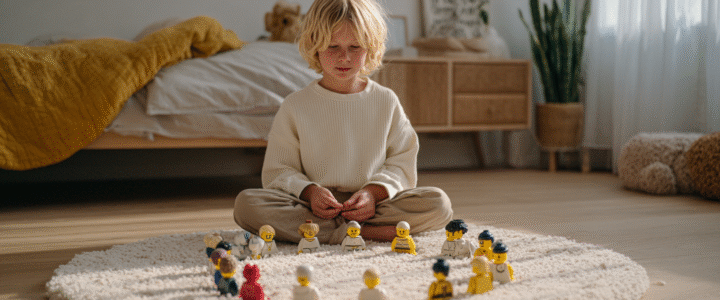
Kids carry their feelings in their bodies. You can see it. When they’re upset, they fidget. When they’re excited, they bounce. Telling them to sit down and talk doesn’t always work. But give them something to move, to hold, to speak through — and suddenly they’re not just talking, they’re showing you what’s going on inside.

Minifigs are perfect for that. They’re small, easy to move around, and just abstract enough to become whoever the child needs. It’s not them crying. It’s the knight. It’s not them yelling. It’s the monster. And that little bit of distance makes it safer to explore hard feelings.

I’ve seen my own kid have an entire meltdown through a pirate character. The pirate was mad because someone stole his boat. The pirate felt like nobody listened. Then the pirate forgave the thief and they rebuilt the boat together. Did my kid plan it that way? No. But he walked away calmer.

Building Emotional Language Through Play

One of the hardest parts of parenting is helping kids name what they feel. “I don’t know” becomes the answer to everything. That’s not because they don’t have feelings. It’s because they don’t always have the words.

Minifigs give those words a shape.

When a child says, “The robot is scared because the lights turned off,” what they might mean is, “I get scared when things are uncertain.” Or “I don’t like going to sleep.” The robot becomes a translator.

And over time, the connection between the emotion and the situation becomes clearer. A kid who once didn’t know what “anxious” meant might say, “The detective has that tight feeling again.” That’s the kind of growth that happens when storytelling is part of regular play.

There’s something helpful about letting kids make a mess of the story. Let the characters fight. Let them cry. Let them break things and fix them. You’re not guiding them through a script. You’re giving them space.

And if you want to offer new characters for their stories, minifig.biz seems to have all of the weird minifigs you can’t get elsewhere. It’s where I found a violin-playing ghost and a grumpy wizard in pajamas. Both have been through a lot of emotional growth.

Stress Relief in a Play Format

There are days when everything feels like too much. For adults, we might scroll or vent or go silent. Kids don’t always know what to do with that overwhelm.

Play gives them a place to put it.

When my daughter had a rough day at school, she grabbed her firefighter minifig and stuffed four others into a tiny brick house. The firefighter kept shouting, “Get out!” and no one listened. After a few minutes, the house exploded, and the firefighter sat alone in the rubble. I asked if she wanted to talk. She said no. Five minutes later, she was fine. Was it about school? About being ignored? About needing control over something? Probably all of the above.

And really, I think that’s enough.

Mindful play doesn’t always look like sitting quietly on a mat. Sometimes it’s chaotic and loud and emotional. But if kids feel safe expressing themselves, even in wild ways, they’re still building those internal muscles. Regulation isn’t silence. It’s awareness and recovery. Minifigs give them the reps they need.

Roleplay Builds Empathy Too

It’s easy to think of imagination as separate from real life. But when kids tell stories with their minifigs, they’re not just working through their own feelings. They’re stepping into someone else’s shoes.

“She thinks the ogre is mean, but he’s really just tired.”
“He stole the crown, but only because no one gave him food.”
“They’re mad because they weren’t invited.”

These aren’t just plot points. They’re emotional exercises.

When kids invent reasons for why a character behaves a certain way, they start to understand that other people also have reasons. That’s empathy. And unlike a lecture about being kind, this kind of understanding sticks. It’s felt, not just told.

That kind of storytelling can carry over into how they treat others. Even how they talk about their own frustrations. “Maybe he wasn’t trying to be mean. Maybe he just felt left out.” That came from a story with three minifigs and a cardboard cave.

You Don’t Need a Whole Setup

You don’t need fancy sets or big builds to make this kind of play work. Most of the time, a few characters and a flat surface are enough.

Sometimes I hand over a lunchbox of random pieces and say, “Tell me what’s going on in this world.” And within five minutes, we’re deep in a drama about an island that forgot how to laugh.

Start simple. Use what you have. Even broken or mismatched pieces work. The point isn’t the perfection of the play — it’s the freedom inside it.

And if you want to add a few fresh faces to your kid’s collection, minifig.biz has characters that feel pulled from alternate dimensions. They’re not just knights and ninjas. You’ll find nervous robots, ancient ghosts, and beetle detectives. It’s fun to let your kid pick one and then build a whole personality around it.

Final Thoughts

Kids are constantly processing the world around them. The good parts, the scary parts, the confusing parts. They don’t always have the tools to say what’s going on. But they do have stories. They have characters.

Minifigs aren’t therapy. But they are therapeutic. They offer a way in. A way out. A way through.

If we give kids the space to play out their feelings, even with something as simple as a little plastic figure, we give them a chance to build self awareness without shame. We give them practice being people.

And maybe, for a few minutes, we get to play too.